
Essex City Directory Collections
Essex is an unincorporated Baltimore County community and a Census-designated place. That means no city clerk and no municipal archive exist there. The residents directory trail for Essex instead runs through county, regional, and State Archives collections. There is no single city series. Three starting points stand out. The Baltimore Suburban volumes, the Baltimore city-and-suburbs runs, and the address-order criss-cross directory named in the Maryland State Archives guide are the most useful of them. Always check a volume for actual Essex page coverage. A Baltimore label in an old book can mean Baltimore City proper, a postal context, or just a chosen suburb. So read the place tag carefully before trusting it.
| Directory collection | Located years | Research holder | What access establishes |
|---|---|---|---|
| Baltimore City directory holdings | 1752-1860 microfiche; 1861-1930 microfilm | Maryland State Archives | City coverage first; inspect each volume for suburban material. |
| Polk city and suburbs directories | 1940, 1955, 1956, 1958, 1961, 1964 | Maryland State Archives | Possible Baltimore County addresses, verified issue by issue. |
| Baltimore Suburban directories | 1957, 1959, 1963 | Maryland State Archives | The strongest located run for Essex and Middle River address work. |
| Criss-cross street directory | 1927 | Maryland State Archives guide | Street-to-occupant searching, with Essex pages still needing review. |
| Essex Times microfilm | 1979 continuation; weekly title from February 28, 1980 | Maryland State Archives | Issue-based notices, obituaries, community events, and local names. |
The State Archives directory list records formats and years for each collection. It promises neither a free image nor unbroken Essex coverage. A target year may land in a gap. Turn to a deed, a county map, probate records, or a local newspaper instead of assuming the household vanished from the residents directory record. Note: A listed year proves a volume exists. Essex-specific page coverage still requires direct inspection of the pages.
Essex Directory Research Desk
The Essex Branch of Baltimore County Public Library serves as the practical local desk. It anchors residents directory research for the area. It offers computers, scanning and printing, and staff referral for historical work. Its public database listing names branch-only access to Ancestry Library Edition, HeritageQuest, and the Baltimore Sun. Gale news resources are included too. Those subscriptions add census, family-history, directory, newspaper, and photo material to an Essex search. The branch publishes no verified Essex-specific list of directory years, though, and no obituary-index inventory.
Test a surname there first. Try an old address and a street variant too. Ask staff for Baltimore County or Essex materials. Request local newspaper microfilm and any vertical file they can identify. A confirmed reference can then travel to the State Archives or a historical society. Remember that a library subscription is an access point. It is not proof that a particular Essex record sits open on the web. For a full view of what is available, see the BCPL database page.
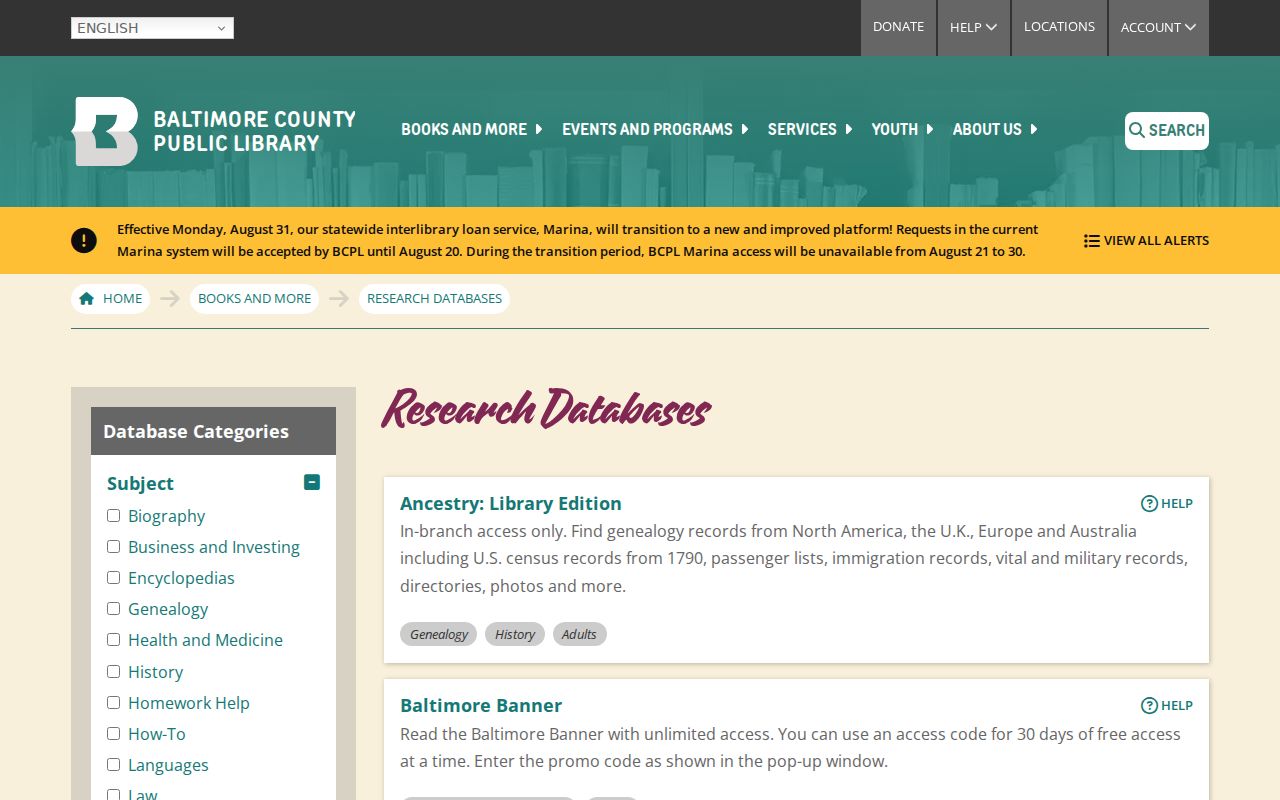
A database screen shows the access route only. It does not reveal the contents of any particular directory volume. Once a relevant Essex entry surfaces, record the volume title. Note the date, the page image, and the exact printed spelling. Note: Essex Branch planning records describe a future branch project. They do not describe a newly opened local-history archive.
Essex City Directories, 1927 to 1964
The 1927 criss-cross directory changes how address research works. A reader can open the street section instead of the surname pages. Then locate the house number. Read the occupant or business listed beside it. The MSA guide treats this as the first criss-cross street directory of its kind. That makes the volume useful when an Essex address is known. It helps when the household name is not. It stays a printed, date-specific lead rather than a browsable online record.
For comparison, bracket a search with the suburban volumes from 1957, 1959, and 1963. Then weigh the city-and-suburbs runs around 1940, 1955, 1956, 1958, 1961, and 1964. The guide also flags gaps in the broader city/suburbs sequence, including 1918-19 and 1929-35. Street names shift form between volumes, which can block a match. Test Eastern Boulevard against Eastern Avenue. Also try Old Eastern Avenue. Check Back River Neck Road, Wilson Point Road, Mace Avenue, and North or South Marlyn Avenue as appropriate.
| 1927 | MSA Guide identifies the first located criss-cross street directory. |
|---|---|
| 1940 | A Polk city-and-suburbs run is listed, but Essex coverage requires inspection. |
| 1957, 1959, 1963 | Baltimore Suburban volumes provide the strongest located Essex and Middle River run. |
| 1964 | A later city-and-suburbs comparison point, not proof of uninterrupted coverage. |
- Write down the known number, street, and target year before opening a volume.
- Check whether the issue is city, city-and-suburbs, or suburban before treating a Baltimore label as an Essex location.
- In a criss-cross section, read the street, number, and adjacent printed name in that order.
- Save the page number and abbreviation exactly as printed, including directional letters and suffixes.
- Use a parcel record, deed reference, map, or notice as a second source for the same period.
Reading an Essex City Directory
A city directory entry packs a lot into one line. Expect a name, an address, a business connection, or a short role description. The MSA Woods sample warns that its OCR carries spelling and number errors. So the page image is the item worth preserving. One Maryland Manual sample shows named Essex lines listing a person, an office or role where applicable, a street or address, and a place. That context helps. Still, it is not the same thing as a complete household listing.
| Printed name | Use the exact initials, spelling, and married-name form before searching variants. |
|---|---|
| Address line | Capture number, street, directional marker, and postal or place wording as printed. |
| Street section | In a criss-cross volume, this is the path from an address to a listed occupant or business. |
| Page image | Controls over OCR text when a letter, number, or abbreviation conflicts. |
| Volume context | Shows whether the source is city, suburbs, gazetteer, manual, or another publication type. |
- Criss-cross directory
- A reverse directory arranged by street and number so an address can lead to a printed name or business.
- Householder index
- An alphabetical listing that normally begins with a name and then supplies an address or other short detail.
- Abbreviation key
- The volume's explanation of shorthand. Photograph it before expanding a mark in an Essex entry.
Directory text names one representative, a business, a boarder, or a phone subscriber. It cannot establish who occupied every room. It proves no ownership either. A current address question belongs with county property rolls and deed records instead. A named historic result can also be checked through the Essex resident lookup path. That works when another official record fits the question.
Essex Historical Directory Files
The Historical Society of Baltimore County holds far more than any printed Essex directory could carry. The library counts over 4,300 volumes. There are also 10,500 photographs, 2,600 vertical files, and 4,400 surname files. Cemetery-inscription files, 1,200 maps, and county histories round out the shelves. A small run of Baltimore City and County directories sits among the shelves. Public hours run Friday and Saturday, 10 a.m. to 2 p.m. The society posts its visitor, mail-research, and copying charges.
These files pair well with an Essex residents directory lookup. Once a directory gives you a name, a date, and a street address, the society's surname and place files can corroborate the trail. The Baltimore County Genealogical Society makes another useful companion. Its collection includes county wills and administration microfilm, census runs, maps, and church files. Vertical and surname files are there too. The Martin obituary file alone holds more than 10,000 entries. Neither society keeps a government resident index. Confirm visit arrangements and file availability before you go. The Historical Society posts its holdings and access terms on its library page.
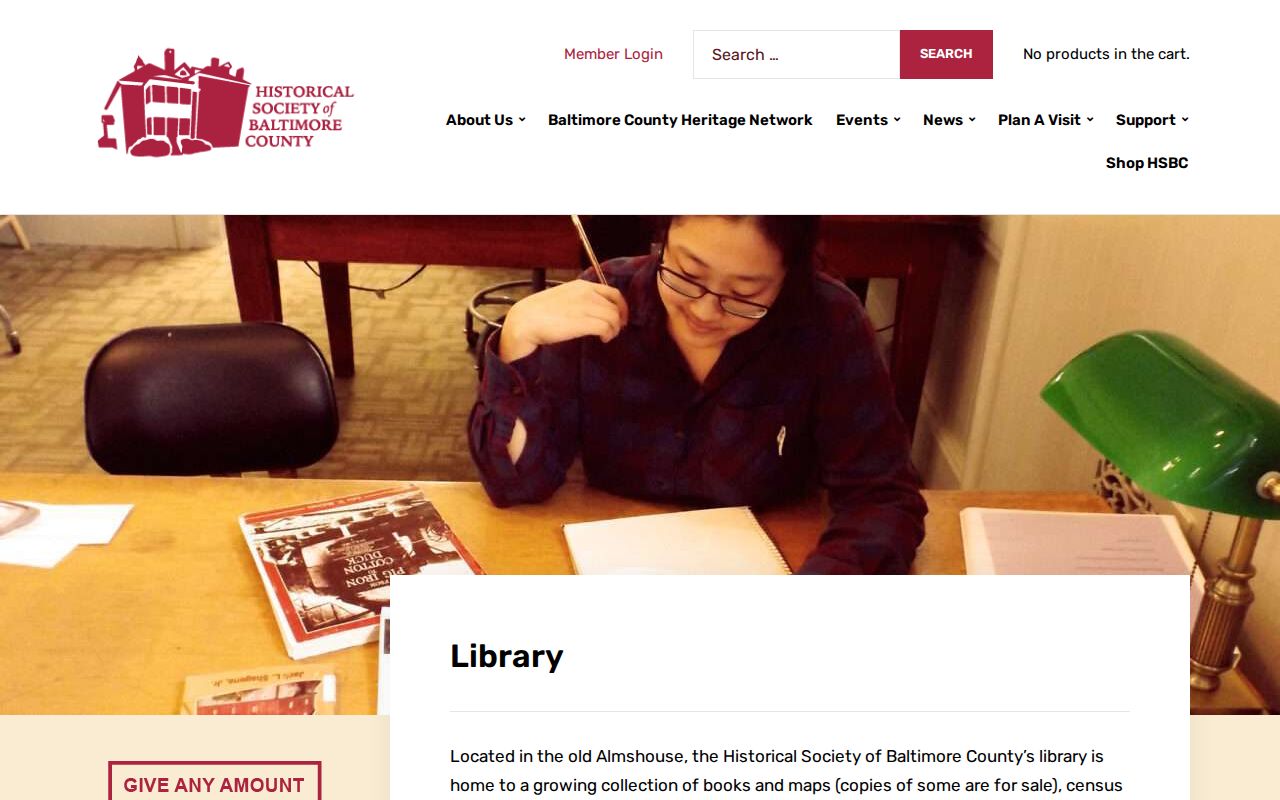
A surname or cemetery file can open the door to a new record set. Keep the citation. Then verify any residence claim against a dated primary source whenever possible.
Essex Maps and Times
A directory address that resists placement has a fix. The Maryland State Archives Sanborn Map Microfilm collection covers Essex and Middle River. It spans 1885 through 1963. One plate can explain a street name. Another shows a building footprint or a redevelopment pattern. It can also show how a site was used in a given period. What a map cannot do is name the occupant. It supplies context for the directory line, not an address-to-person index.
The Essex Times collection record adds a second local layer. That weekly title began February 28, 1980, continuing a 1979 title. Search it by issue and date. Look for an obituary, a civic announcement, a business name, or a community notice. Treat the paper as a contemporaneous publication rather than an official residence record. Map and newspaper evidence pair well with printed volumes. The MSA directory collection rounds out the set.
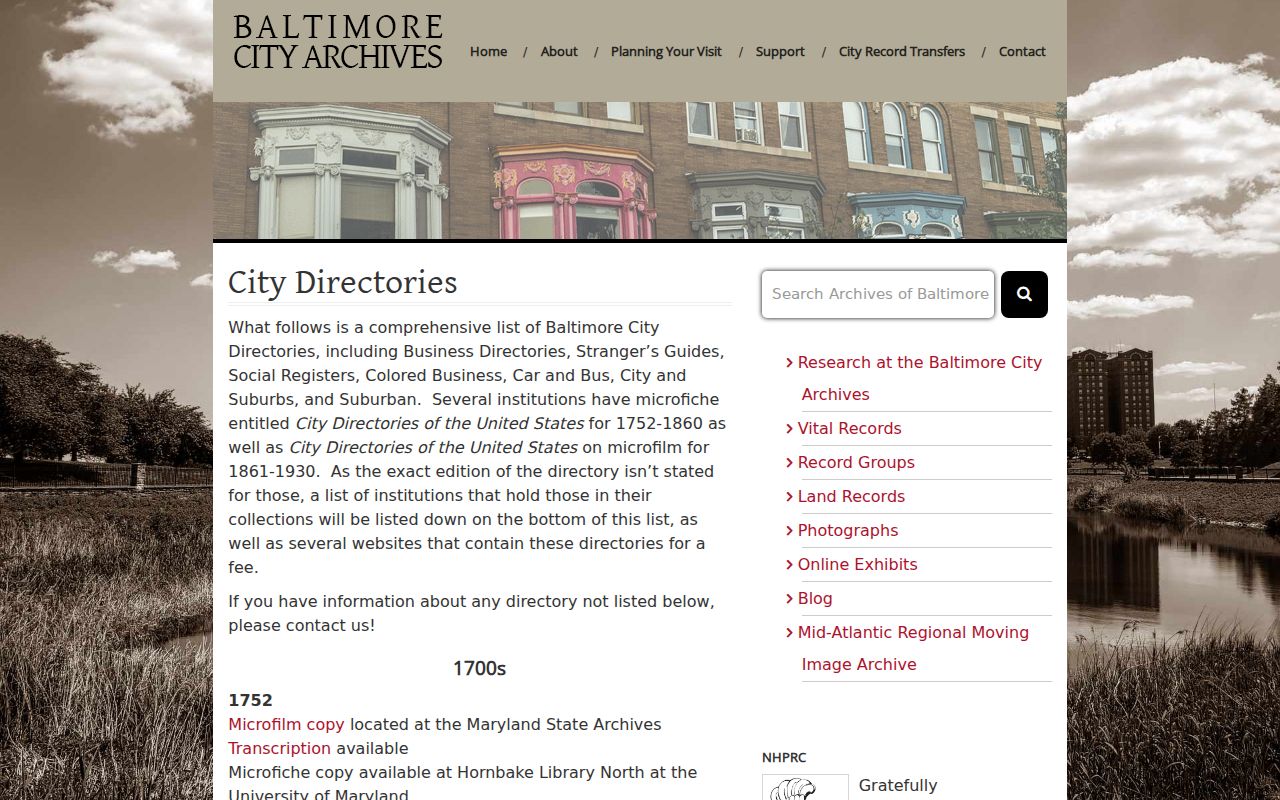
Read the collection title and page context before trusting a text hit for "Essex." In the Woods 1856-57 sample, the word can reference a Baltimore City street rather than Essex, Maryland itself.
Note: A map plate explains an address setting, but it cannot turn an ambiguous directory mention into proof of an occupant.
Tracing an Essex City Directory
Trace one household through the Essex city directory collections in date order. Begin with the first reliable name or address. Then log every later appearance and every earlier one. Where a directory year lines up with a census year, pair them. Let the census serve as a broader household check instead of copying a name across a gap. For an address-first question, flip the sequence. Start with a criss-cross or suburban volume. Compare the result against a dated map. Then chase a deed, a probate record, or a newspaper clue.
- Find the earliest confirmed appearance and retain the full citation, including collection, year, and page.
- Follow the name forward and note moves, spelling changes, and altered street wording.
- Use a criss-cross directory for years where an address is the stronger starting point.
- Compare the entry with a census, map, parcel, or newspaper source from the same period.
- Close a disappearance with an obituary, cemetery file, probate lead, or later deed rather than guessing why the listing ended.
The longer record history is uneven. Baltimore County land records run from colonial series into Circuit Court records beginning in 1851. The locally focused Glenn L. Martin collection preserves plats, surveys, and deeds. It also holds correspondence from 1926 through 1967 around Middle River and Essex. Those materials illuminate land and road history. A directory, though, remains evidence of a printed contact or occupancy lead. It speaks for its own year alone.
Note: A name missing from one directory year can signal a move, a different listing style, or a coverage gap.
Essex Has No City Archive
Essex research is county-centered. There is no Essex city hall, city clerk, city court, city cemetery office, or city-issued directory. Baltimore County performs the local government functions. The Essex Branch, the State Archives, the Essex Historical Society and Museum, and county historical organizations carry the historical research routes. The local museum sits in a former 1920 fire and police station. It helps with community history, photographs, and archives. It is not an online people index.
That distinction prevents a common false lead. Search a dated residents directory for a historic name or address first. Then move to the proper custodian for a map, deed, estate, or current parcel question. Keeping every source in its proper role makes an Essex directory result more useful. That makes it far less likely to be overstated.